

Alt-Bionics History
The Injury That Inspired Alt-Bionics
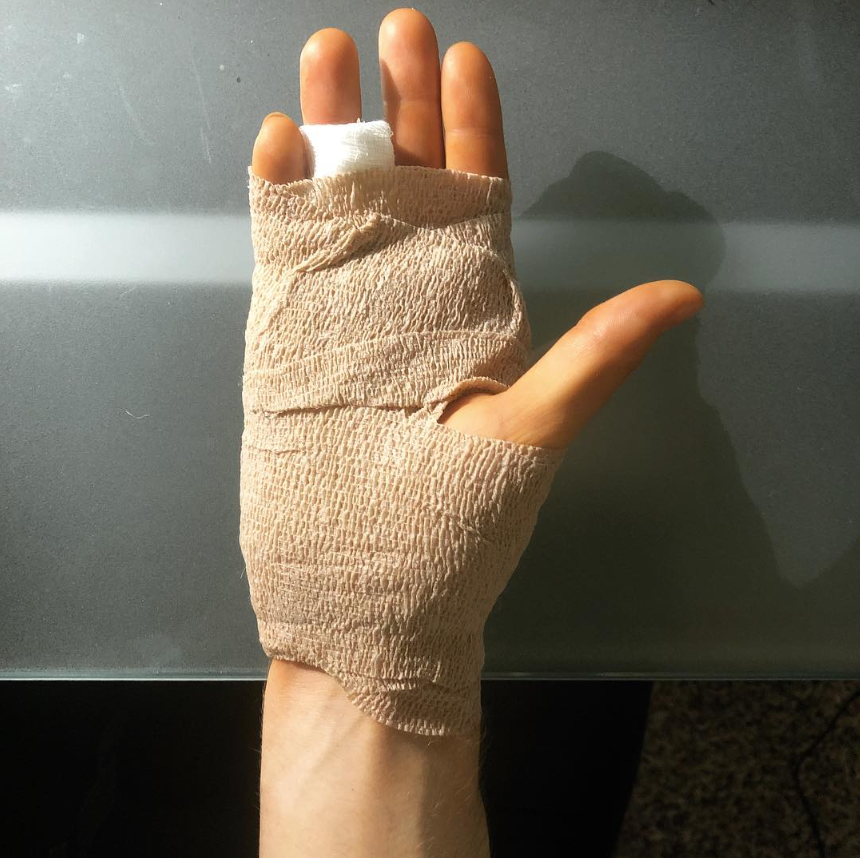
In 2017, Alt-Bionics CEO and Founder Ryan Saavedra suffered a rock climbing injury that severely damaged his A2 pulley, a small band inside your finger that holds tendons close to the bone. Doctors recommended an experimental surgery to remove the A2 if he ever wanted to climb again without pain. Ryan reluctantly agreed and the surgery was successful, but the recovery proved to be difficult. He lost the use of his hand for six months, and it took nearly a year to return to normal activity. Though he eventually regained full function, the experience left a lasting impact and became the catalyst for what would become Alt-Bionics.
At the time, Ryan was a sophomore studying electrical engineering at UTSA. Unsure if his finger would ever fully heal, he built a mechanical finger using cardboard, yarn, a straw, and a spare electronics kit. This early prototype sparked his interest in prosthetics. He was shocked to learn that prosthetic fingers often cost $5,000 to $20,000, and full hands ranged from $15,000 to $200,000, all for technology not far off from what he had built on his own. This discovery launched Alt-Bionics’ mission to create high-quality, affordable prosthetics for those who need them most.
The $600 Bionic Hand and Army Ranger Ryan Davis
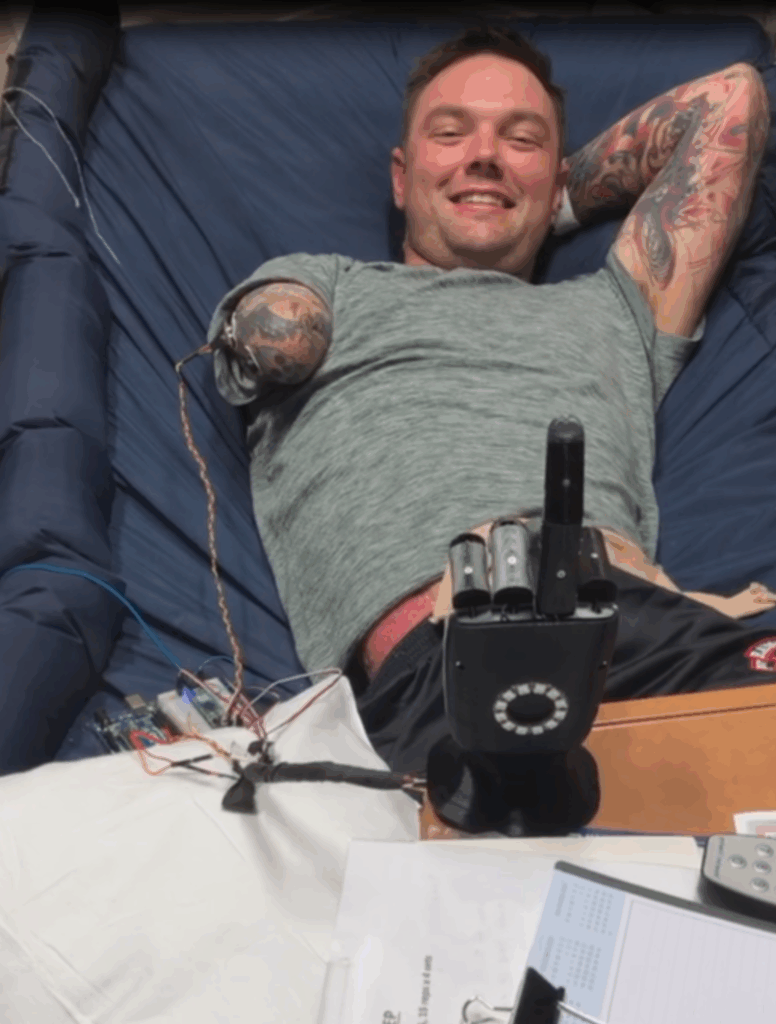
In 2019, two years after his injury, Ryan and his senior design team at the University of Texas in San Antonio (UTSA), modified an open-source robotics design to build an A.I. enhanced bionic hand with a sense of touch for only $600, which was a fraction of the nearly six-figure price tag of many robotic prosthetics available on the market.
The college project garnered headlines in the US and abroad, one of which reached a friend of Ryan’s who asked if her cousin, Army Ranger Ryan Davis could try out the hand. Ryan Saavedra of course agreed, and brought over A.I. enhanced hand to Ryan Davis at the local VA hospital where Ryan Davis was recovering after being involved an IED explosion in Afghanistan. After hooking everything up, all Ryan Davis wanted to do was bring in his attending nurses and give them all the bird. This of course was in jest and brought a smile to the Ranger, his nurses, and his attending family. A family member in the room turned to Ryan Saavedra and asked what was next for this life changing technology. This was the moment Alt-Bionics was truly born.
6 Months later, following Ryan Saavedra’s graduation from UTSA in 2020, Alt-Bionics, Inc. was officially created.
The Advent and Market of Humanoid Robots
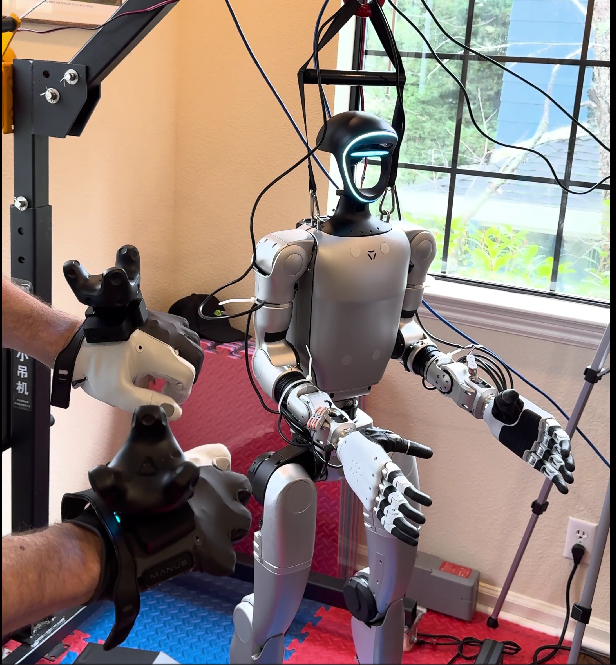
As Alt-Bionics evolved, our expertise in building highly functional, human-like hands for prosthetic applications naturally aligned with the emerging humanoid robotics industry. Humanoid robots require hands that are not only dexterous and precise but also durable and adaptable, and our years of experience designing for human use gave us a unique advantage.
In 2023, we expanded into this market, developing modular, high-performance robotic hands that bridge the gap between prosthetics and robotics. These hands are engineered for easy integration with humanoid platforms, featuring advanced control systems and tactile feedback to support complex tasks.
Today, our Surge Hand is being evaluated by leading humanoid robotics companies and research institutions. Even organizations outside of robotics, such as Netflix, have utilized our technology for special projects and promotional events. Our goal is to provide the robotics sector with cutting-edge, cost-effective solutions that honor our core mission of accessibility and innovation.
Bridging Innovation Between Prosthetics and Robotics
The true beauty in developing advanced hands for both amputees and humanoid robotics lies in the powerful cross-pollination of ideas and technologies. Innovations in one area consistently drive progress in the other, while limitations identified in each design inform improvements in future iterations. For those in robotics, this means that every breakthrough in prosthetics lends itself in advancing the next generation of robotic hands. But more importantly for everyone, each and every single innovation carries the potential to transform lives, forging a meaningful connection between cutting-edge robotics and real-world human impact.
Our core mission is to push the boundaries of innovation while ensuring these hands remain truly accessible to people. No matter how far our technology advances, the heart of our work will always be dedicated to improving human lives.
We are trying to build a future where humanity and technology walk hand-in-hand.